My Development as a Future Leader

Снимок экрана 2017-12-17 в 23.40.04

Based on ‘Great-men’ theory, leaders are born or are destined by nature to be in their role at the right time to reflect on the certain traits that envisage a potential for leading (Hoffman et al, 2011). With right type of leadership style in an organisation, leaders can be made. With different type of leadership styles to discuss, where high authority plays an important role within autocratic leadership style, whereas, power is shared among the democratic leadership and authority is asked through laissez-faire (Mullins, 2016).

According to Joseph (2018), leadership trait is influence through social which maximise the efforts of others towards the achievement of a goal.

My Brand of a leader

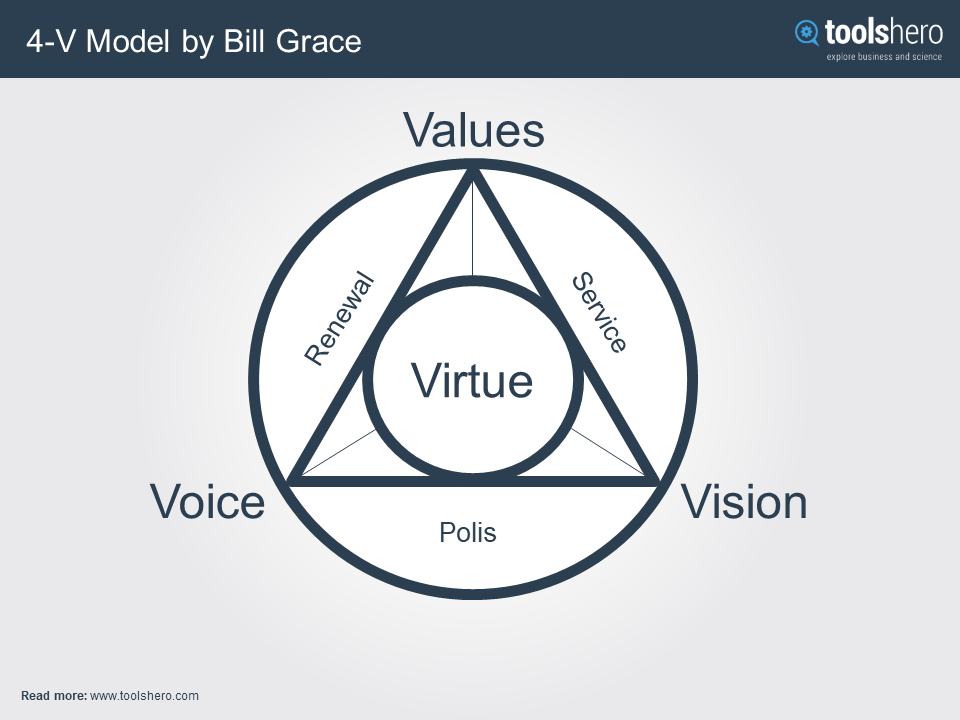
As part of being a leader, one thing that comes to my mind is lead the team with different leadership styles depending on the situation although I have always wanted to be democratic leader. According to Woods (2010), democratic leadership style is a participating and shared leadership in which the members take a more participating role in decision-making procedure. A little about me is that, I am the visionary person in everyday life. However, through the leading process, I aim to fulfill the four Vs model of values, vision, voice and virtue to develop myself and my surrounding.
Related image

Source: Toolshero, 2018

Evaluation of Own Leadership Style

Being part of a business family, I was chosen to manage employees twice or older than myself. For my first experience, I was unable to manage well as having a tight control does not work among the elders, therefore, I tried to understand my employees’ behaviour and the market I am working in. Leading me to understand and realise that a single approach would not be enough to manage it. Moreover, by building relationship with the employees through listening and asking for their opinions, I came to a point of applying democratic style depending on the situation. As Joseph (2018) stated, the power of listening is what make the team to grow and come to a point of accomplishing small goals. However, the term ‘listening’ does not always work in dire or pressured situation as one must critically analyse the current situation and enforce initiatives into it as in ‘autocratic leadership’. Through managing and listening different culture background and age, I have come to understand my surrounding.

Evaluation for my Personal Development

Feedback is described as a way to balance and develop current and future actions and behaviours (Susan, 2015). Through my early life, the feedbacks were so positive that I once led me thinking that “living is so easy”. However, after I experienced the unexpected scenario, I came to realised that observing and listening first is the key power for self-development. However, through university life, listening and observing itself does not actually help as applying through physically is missing. All these actions relates to being a democratic and acceptable leader. Nevertheless, the feedback througout my life gave me a wrong view until I observe through it. Through experience and surroundings, I would not say that I am perfect, but I learnt a lot step-by-step. One thing about myself is that, I observe the situation carefully and act what I should do next. Through experiencing an unhonest feedback for two third of my life, I current seek more criticism for myself from other, leading them to think that I am weird. I am now twenty years of age, having a long journey throughout my life and I planned to learn as much as I can through my surrounding.

Applying different leadership style in different situation has been discussed above, as to evaluate my experience throughout my life. Leading is easy in another person’s view as all they see was order around with one finger (Fortune, 2014). The secret part of hardship for leadership is decision-making and needed to be mentally fit (Fortune, 2014).

Future Leader’s Journey through Development and Skills

Based on my nature, I would shift my leadership skills depending on the situation that I am in. Hence, the shift in my communication and decisions will be my major area. Moreover, by applying adaptation strategy based on the fast-chaning enviornment helps me proceed further.

Through planning, develpment and determination,  the future vision of becoming a serious leader understand that they are always leading no-matter the situation is (Schrage, 2016). However, the downside of myself is, I would not stop observing and listening unless the surrounding’s pressure rises.

Reference:

Change Management

Through a competitive fast-moving global environment with innovative technologies, an organisation or a country must consider to its continual effectiveness and development. Based on Mullins (2016), for a successful and developed organisation, changes must be managed with the organisational culture. However, in some businesses such as SME, change would be difficult until they have a balanced and stable foundation (Mullins, 2016).

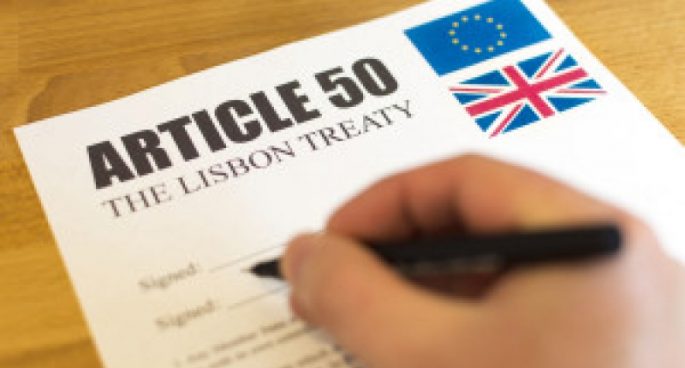
With the context of BREXIT. On 29th of March 2017, the UK officially triggered article 50 of the Lisbon Treaty, paving the ground for the UK’s plans to leave the European Union (BREXIT). The triggering of article 50 was historically ground-breaking, and it marked the beginning of a two-year period in which the politician, business and the people of Britain have to prepare for a life after Brexit. Nevertheless, London-based businesses will be the most affected by article 50 of the UK’s plans to leave EU. Although these businesses might vary from industry to industry, there will be a two-year period for London to prepare.

Image result for change

Source: Mulder, 2012

BREXIT change Britain

Based on the effect from BREXIT, article 50, London-based industry such as grocery market chain, Banks, insurance company, etc. will been effected mainly through price fluctuation.

Tesco is a London-based grocery retailer, currently leading in the UK’s competitive grocery market. However, after the article 50 of UK leaving EU, Tesco should consider the different range of effect that will have on the business.

(Source: 2ser 107.3, 2016)

Losing market shares in its own leading market. Tesco are in a dire situation as it has to plan ahead for BREXIT plan and re-taking its market shares. The effects of BREXIT will lead the country’s economy with high in food price, unable to access with fair trade products, changing migration policy and price fluctuation, etc (Stojanovic and Tetlow, 2018). Nevertheless, Tesco will mainly be affected by the cost of food price with unable to access the fairtrade food product with their oversea suppliers. Tesco’s CEO believe that if BREXIT happens it will generate more costs for them as they will be facing with high investment in purchasing food stocks (Independent, 2018). Through BREXIT, Tesco will require a major transformation in the operation for the business.

Lwein’s Change management model for BREXIT

Kurt Lwein is mainly seen as the founder of change management, his “unfreeze-change-freeze” model is regarded as a classic approach to managing change (Cummings et al., 2016).

Related imageRegarding to Tesco, article 50 operation, the after effects can be solved by following Lwein’s change management as through unfreezing, Tesco can develop new domestic supplier relations to locally source products that are at-the-end for the high paid tariffs due to BREXIT. Partnership with the local supplier will allow Tesco to reduce the cost on importing taxes. According to Hussain, et al. (2018), the second step is change in management system, based on the above statement, Tesco should establish a domestic supplier partnership, for a long-term plan, before a potentially hard BREXIT deal is made. With the next step of freeze method, Tesco and the managers should implement the plan and structure with the domestic supplier to solidify for the further state.

However, if the organisation resisted changing, uncertain issue for the organisation can be avoided (Husain et al, 2018). Nevertheless, resistance will also lead the company to spend high on unnecessary expenses.

Unavoidable Change Management

Resisting to change may avoid uncertain future of an organisation. However, change management is applied for further growth and development of the organisation (Cummings et al, 2016; Hussain et al, 2018; Kotter and Schliesinger, 2008). Moreover, plan after action is common in change for firms and managers in today’s world. However, based on BREXIT, an immediate action is needed while applying through ‘change three step’ for further development.

Reference:

  • Burnes, B. (2009), ‘Managing Change’ 5th edn, Financial Time Press
  • Cummings, S., Bridgman, T. and Brown, K. (2016) ‘Unfreezing change as three steps: Rethinking Kurt Lewin’s legacy for change management’. The Tavistock Institute 69(1), 33-60
  • Hussain, S. T., Lei, S., Akram, T., Haider, M. J., Hussain, S. H. and Ali, M. (2018) ‘Kurt Lwein’s change model: A critical review of the role of leadership and employee involvement in organisational change’. Journal of Innovation & Knowledge 3(3), 123-127
  • Kotter, J. P. and Schliesinger, L. A. (2008) ‘Choosing strategies for change’, Harvard business review 86(7/8), 130-139

Contemporary Leadership Styles: How relevant are they in today’s changing world?

Are leadership styles from 90s still relevant in today’s working world? Leadership models of the last century have been products of top-down, bureaucratic paradigms. These models are eminently effective for an economy premised on physical production but are not well-suited for a more knowledge oriented economy (Uhl-Bien, et al., 2007: 298).  Throughout the years, changes has become part of people’s culture as their surrounding kept developing through time. However, with quantitative and qualitative research, some leadership styles have been developed. Researchers and practitioners such as Maslank (2004) and Nawaz, et al. (2016) claim that leadership is a flexible development process for the changing world. However, as some people’s behaviour have been transformed, it would be the leader’s decision to decide which step should he go next. Discussion and explanation of modern-day leaders’ actions will be focused throughout the blog.

Related image

(Leadership Today 2016)

Do people accept the contemporary leadership style in today’s world?

According to the leadership literatures and Nawaz, et al. (2016), leadership theories have been modified throughout the year as some people accept the changes and some may not. However, based on how relevant the leadership style depends on the context of the organisation it applied (Nawaz, 2016).

As mentioned, some organisation and people still accept the contemporary leadership styles and some do not. Hemerling (2016), pointed out that some people/organisation do not accept change as changes are exhausting, as they look for the short-run.

(Ted Talks 2016)

Evolution of Leadership Styles

The effort toward explorations for common leadership traits have been preserved over the centuries. However, from analytical perspective of each leadership styles, many people found that some of these theories are irrelevant (Nawaz, et al., 2016). The Great-Man theory, trait theory, contingency theories, style and behaviour theory, process leadership theory, transactional theory and transformational theory. These theories have been critically evaluated and developed as some of these theories are irrelevant in today’s changing world (Nawaz, et al., 2016; Maslanka, 2004).

Image result for 21st century leadership

Source: Five Degree consulting, 2013

Focusing on one of the most irrelevant leadership style in 21st century, “Great-Man Theory”. Nawaz, et al. (2016) and Hoffman, et al. (2011) claims ‘Great-Man’ approach to leadership has persisted for almost as long as social scientists have attempted to analyse individual differences. Based on the Great-Man theory, leaders are born, not made. With individual discrimination, ‘Great-Man’ theory has led people to think that only men with unique and heroic potentials could become the leaders. The theory has been criticised that not only  men with heroic potential can be leaders. However, this leadership theory then progressed from ‘leaders are born, not made’ to leaders are born or are destined by nature to be in their role at the right time to reflect on the certain traits that envisage a potential for leading (Hoffman, et al., 2011).

Challenges been faced by leaders in 21st Century

In today’s world, Leaders face different kind of challenges including the culture change (Paul, 2017). Therefore, difficulty increases along with adopting western leadership, based on this affect, such traits of leadership have been criticised. Center for creative leadership (2018) pointed out that leaders face problems due to different connection between individuals who rely on different sources that are being controlled by different background.

For example, expanding of Foxconn industry to western country will have a major impact on the workforce. With unbalanced organisational culture and discrimination between managers and employees, Foxconn would face a major workforce crisis. However, if Foxconn decide to expand their organisation to west, it would be wise to apply both bureaucratic leadership and autocratic leadership when needed as Foxconn have high demand from their customers.

Views on Contemporary Leadership Traits

Although many companies are adapting to developed ledership traits, it can still be seen that, to an extent, contemporary leadership styles are still accepted. Organisations can be managed through different methods of leadership styles as a single leadership style would not be enough to manage an organisation in this developing world.

Reference:

  • Crowley, M. C. (2012) Lead from the Heart: Transformational Leadership for 21st century (1st edn), Bloomington: Balboa Press
  • Center for Creative Leadership (2018) The Top 6 Leadership Challenges Around the World [online] available from: <https://www.ccl.org/articles/leading-effectively-articles/top-6-leadership-challenges/&gt; [1st January 2019]
  • Eagly, A. H. and Chin, J. L. (2010) “Diversity and Leadership in a chainging world”. American Psychologist, 65, 216-224
  • Hoffman, B. J., Woehr, D. J., Robyn, Maldagen-Youngjohn and Lyons, B. D. (2011) “Great man or great myth? A quantitative review of the relationship between individual differences and leader effectiveness”. Journal of Occupational and Organisational Psychology, 84, 347-381
  • Mullins (2016) Management and Organisational Behaviour. 11th edn. Harlow: Pearson Education Limited
  • Maslanka, A. M. (2004) Evoluation of Leadership Theories. [online] MBA thesis. Grand Valley State University. available at: <https://pdfs.semanticscholar.org/74f0/43f82e4449ce2c577f5b6bdb6c226e011dbd.pdf&gt; [25th December 2018]
  • Nawaz, A., Ahmed, Z. and Khan, I. U. (2016) “Leadership theories and styles: A Literature Review”. Journal of Resources Development and Management, 16, 1-7
  • Paul, K. (2017) 4 Unavoidable Challenges Leaders Will Face In 2018 [online] available from: <http://www.paulkeijzer.com/4-challenges-leaders-face-2018/&gt;
  • Ted (2016) 5 ways to lead in an era of constant change [online] available from: <https://www.ted.com/talks/jim_hemerling_5_ways_to_lead_in_an_era_of_constant_change#t-180853&gt;
  • Uhl-Bien, M., Marion, R., and McKelvey, B. (2007). Complexity Leadership Theory: Shifting leadership from the industrial age to the knowledge era. The leadership quarterly18(4), 298-318.

Can Cultures be Managed within Organisations?

 What comes into your mind when you see the word “Culture”. It is indeed a broad topic for every people and organisation. However, based on the organisational culture, it has a different meanings and difficult to clarify or explain in details. Mullins (2016) cited from Rachael Johnson, Editor of Governance and Compliance magazine, mentioning about the understanding of a working environment culture is that it embodies the ethos and values of a particular organisation, which are expressed through the way it operates and the practices it undertakes. Generally, the organisational culture is similar to an individual’s personality (Mullins, 2016).

ORGANISATIONAL CULTURE

(Source: LinkedIn Slide Share, 2012)

Culture challenges Foxconn face within the Organisation

To start illustrating the in-depth of how important an organisational culture is, I would like to share one of the ongoing case for the biggest tech company in the world. Within the organisation of Foxconn, the scenario of working sector, the company focuses in autocratic leadership with high working hours that made workers to cause an unpredictable results, such as suicide (Cult of Mac, 2018). The case is still on an ongoing results even after the company tried to manage the safety of the workers by building a safety-net around the firm’s buildings (Wired, 2011). Cult of Mac (2018) reported that the KGI Securities analyst Ming-Chi Kuo went through an investigation on shipping for iPhone X per day is between 440,000 to 550,000 units.

(Source: Hothardware, 2010)

Part of an Organisational Culture

According to Lim (1995), an organisational culture’s success is also based on the employees to be certain and linked their relationship between the organisation and their role. Based on Handy’s (1999) four classes organisational culture, power, task, role and person culture have each of their own motivation and consequences. In the case of Foxconn organisational culture, a high surveillance can be found within the compound. It is said that Foxconn employees must not speak to each other while working with less-talk-more work policy (The Guardian, 2012).

Image result for role culture

(source: readytomanage, 2012)

A large play in role culture having a chance of low rate of change and uniqueness of working process is a problem. Foxconn working nature is still unchanging with a same work pattern for among the past years. However, issues can be solved if there is a change in the management system and the employees working patterns as they had been having over-time work, based on the reports. Thus, for their future expansion, their organisation culture need to have a slight change.

Image result for time for some organisational changes quotes

Mullins (2016) claims that culture has an important effect on the behaviour and actions of individuals, on the process of management and on organisational performance. However, in the case of Foxconn, Organisational culture is not about tackling each employees’ working performance, instead, it is part of the brand image of the organisation (Mullins, 2016). Employees take in the culture and reacts to it. With psychologically intense environment from the managers, workers been facing with a tense aggressive culture within the organisation. Changing culture take time for the organisation and for the employees, but to overcome this change, the firm should have a consultation office or counselors on site with an appointment order. Moreover, by attempting with less aggressive management style and surveillance culture, Foxconn’s employees came to a breaking point.


Within a certain measure, Culture can be managed.

With a certain amount of time and effort, the organisational culture can be managed within the firm and employees. As Mullins (2016) claims that individuals and the organisation been resisting the changes of the culture, there are a different type of reasons for the resistant but all take time. With various exceptions, organisational culture been a top priority for organisations in today’s world. Companies must understand the stage of decisions and strategies through the organisational culture. Different organisation have different culture, with different culture theories and usage, big firms such as Apple and Google would find it difficult to change their culture, but it’s not necessary for them. To support this, from Handy’s (1999) culture diagram, Apple have the power culture which is controlled by the higher ranks that make the company run smoothly with a fast-paced process. Moreover, will the Apple supplier (Foxconn) be able to manage their organisational culture if they are planning to expand it to the West? The answer is a definite “Yes”. To cite this, change cannot be avoided unless the company have a stable foundation, culture change is what being part of the social and organisational life (Mullins, 2016). With the right management and strategy, the organisational culture can be managed within the firm.

Reference:

  • Lim, B. (1995) ‘Examining the organisational culture and organisational performance link’. Leadership and Organisation Development Journal 16(5), 6-7
  •  Mullins, J. (2016) Management & Organisational Behaviour. 9th edition. Harlow: Pearson